Vol. 9 No. 2 (2026): Revista de Ecocardiografía Práctica y Otras Técnicas de Imagen Cardíaca
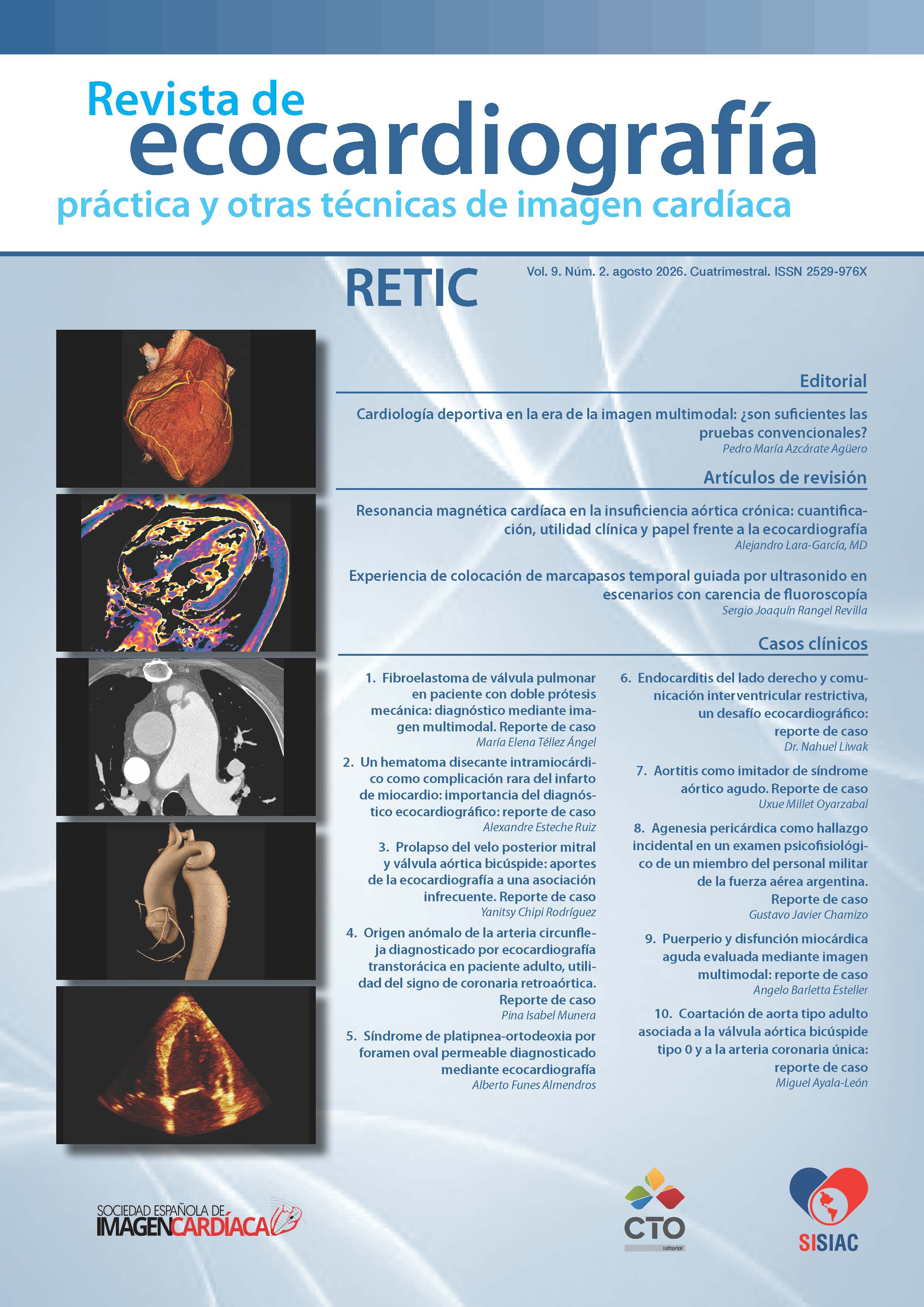
The August 2026 issue of RETIC represents a renewed commitment by the journal to scientific excellence, continuous updating, and the dissemination of knowledge in cardiovascular imaging.
The issue opens with the editorial “Sports Cardiology in the Era of Multimodal Imaging: Are Conventional Tests Sufficient?,” a highly timely reflection on the challenges posed by the cardiovascular evaluation of athletes. Building on the indisputable role of the electrocardiogram, exercise testing, and echocardiography, the article analyzes the scenarios in which it is necessary to incorporate advanced imaging techniques to more accurately characterize coronary anatomy, myocardial substrate, and individual cardiovascular risk.
This issue also includes two review articles of particular clinical relevance. The first addresses the role of cardiac magnetic resonance imaging in chronic aortic insufficiency, with special attention to the quantification of regurgitation, the assessment of ventricular remodeling, and its complementary value compared to echocardiography. The second presents experience with ultrasound-guided temporary pacemaker placement in centers without access to fluoroscopy, highlighting an effective, safe, and particularly useful alternative in emergency situations and resource-limited settings.
This issue is rounded out with ten clinical cases selected for their educational value and diagnostic complexity. These include a pulmonary valve fibroelastoma, an intramyocardial dissecting hematoma following a myocardial infarction, the association between mitral prolapse and a bicuspid aortic valve, coronary anomalies with uncommon presentations, platypnea-orthodeoxia syndrome, right-sided endocarditis associated with a ventricular septal defect, aortitis mimicking acute aortic syndrome, pericardial agenesis, postpartum myocardial dysfunction, and aortic coarctation with associated valvular and coronary anomalies. In all of these conditions, cardiovascular imaging plays a central role in both diagnosis and treatment planning.
With this new issue, RETIC reaffirms its commitment to serving the scientific and healthcare communities, promoting the exchange of knowledge and establishing itself as a leading resource for training and continuing education in cardiovascular imaging.
Published:
2026-08-31